Understand any stock in simple English
Enter a ticker to learn what the company does and how it makes money.
Hankook Tire & Technology Co., Ltd.
Hankook makes and sells tires for cars, SUVs, trucks, buses, and electric vehicles around the world.
Hankook is a tire maker. If you drive a car, ride a bus, or see a delivery truck rumble past, there is a decent chance one of its four contact patches with the road is a Hankook tire. The company builds tires for ordinary passenger cars and SUVs, for big commercial trucks and buses, and increasingly for electric vehicles, which chew through rubber differently because they are heavier and deliver instant torque. It sells these tires in South Korea and across the world, and it makes most of its money by selling replacement tires to drivers and fleets, plus original equipment tires that get fitted to brand-new vehicles at the factory.
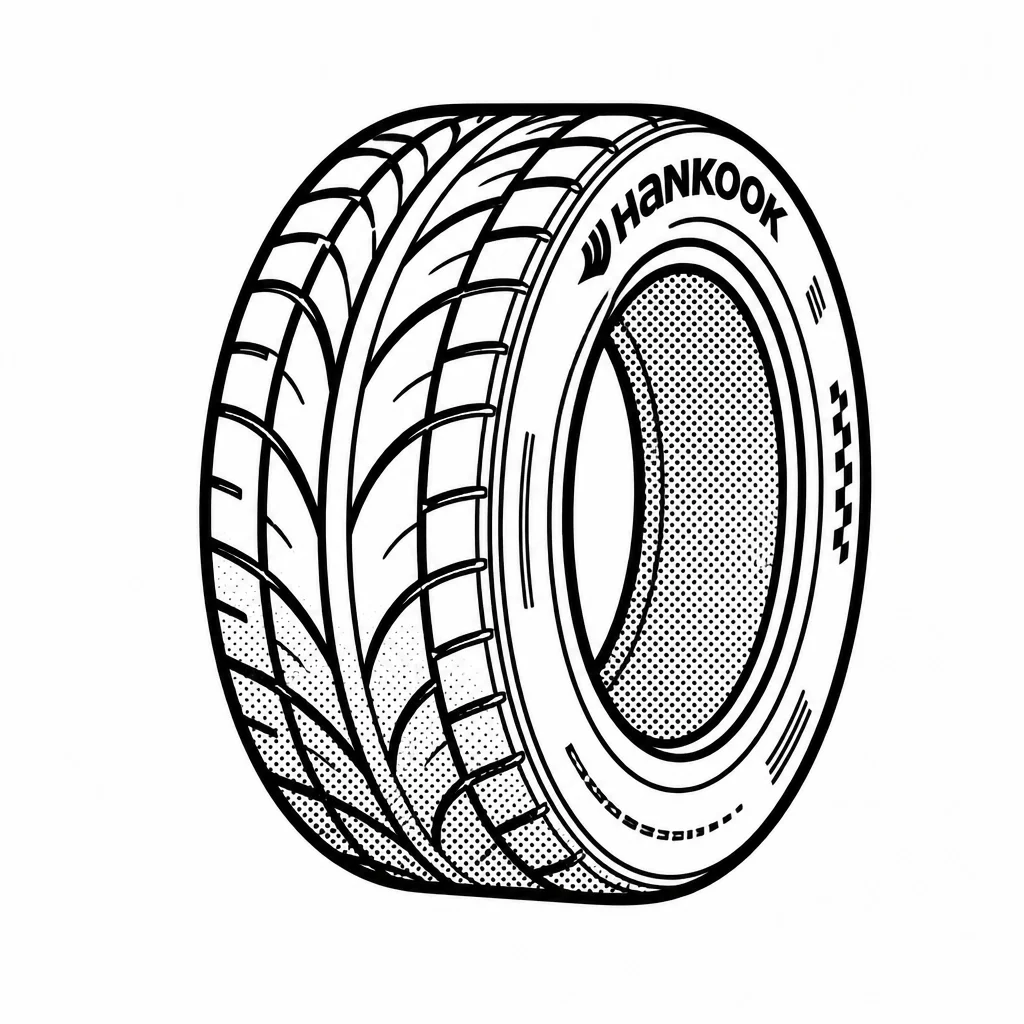
The tire business is a strange one: the product looks boring, but it is genuinely hard to make well. A tire has to grip in rain, survive heat, stay quiet at highway speed, and last tens of thousands of miles, all while being cheap enough that people do not faint at the price. Hankook competes in the crowded middle-to-premium part of that market against giants like Michelin, Bridgestone, and Goodyear, and its pitch is essentially value: premium-adjacent performance without premium-brand pricing. Winning a spot as original equipment on a new car is a quiet coup, because the owner often buys the same brand again when the tires wear out. Hankook is based in South Korea and has grown from a domestic supplier into a genuinely global player, with factories in Korea, China, Hungary, Indonesia, and the United States. That American plant matters: building tires near the customers who buy them cuts shipping costs and softens the blow of tariffs and trade fights. The company also owns a stake in Hanon Systems, an auto-parts supplier, which ties it more deeply into the broader car industry beyond just rubber.
Tires are a cyclical, capital-hungry business. When economies slow or car sales dip, demand for replacement tires holds up better than new-car demand, which is a nice cushion. But raw material costs, especially natural rubber and oil-based synthetic rubber, swing around and squeeze margins. Hankook spends heavily on factories and brand-building, including motorsport marketing, and returns cash to shareholders through dividends and share buybacks. It is, in short, a steady industrial company making an unglamorous product that literally keeps the world moving.
Saved answer · last researched 12 Nov 2026