Understand any stock in simple English
Enter a ticker to learn what the company does and how it makes money.
Alinma Bank
Alinma Bank is a Saudi bank that takes deposits and lends money to people and businesses, and earns most of its money from the difference between what it pays depositors and what it charges borrowers.
Alinma Bank is a full-service bank in Saudi Arabia. It takes in people's salaries and savings, lends money for homes, cars, and everyday needs, and does the same for businesses — helping companies finance equipment, projects, and growth. It also runs the payments plumbing most of us touch daily: debit and credit cards, point-of-sale terminals for shops, and online banking.
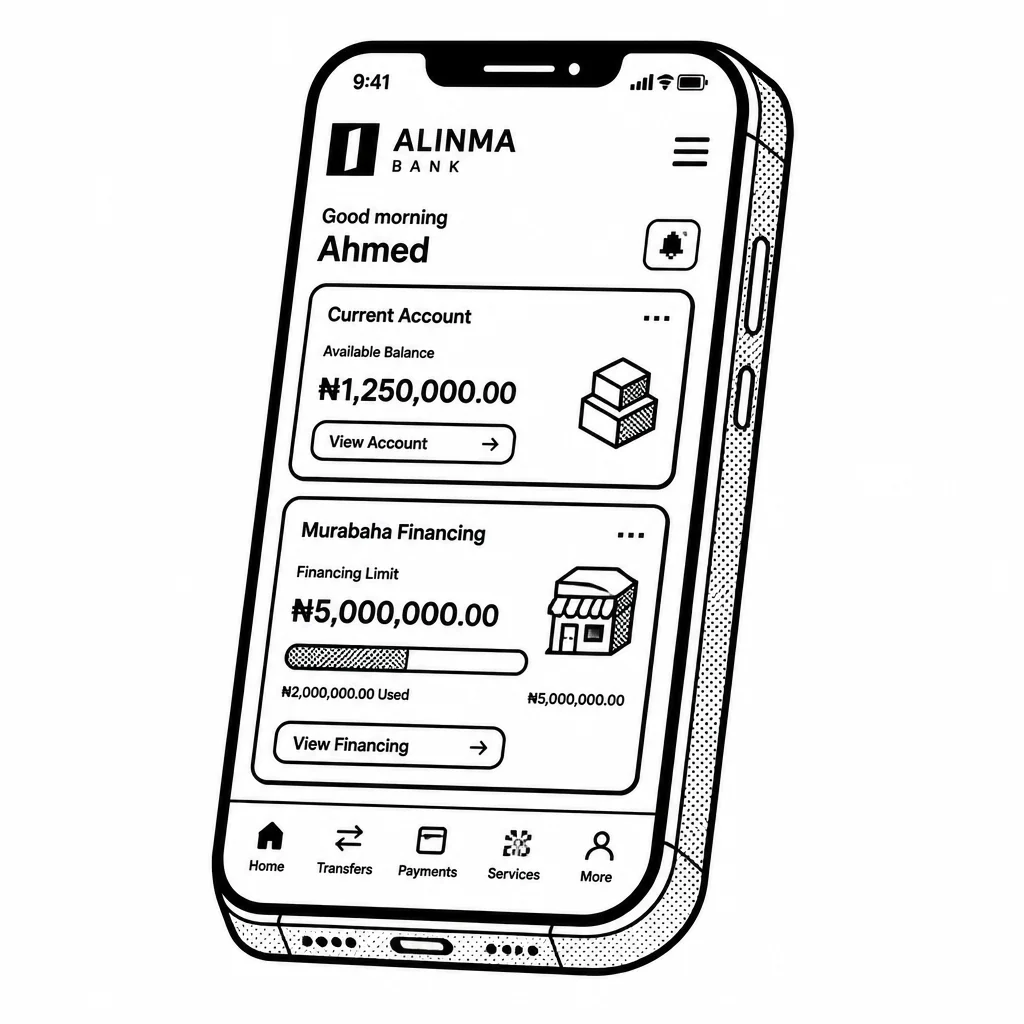
The engine of the business is the gap between two rates. The bank pays depositors a little for keeping their money and charges borrowers more, keeping the spread. On top of that it collects fees for cards, payments, accounts, and wealth products. Being a Saudi bank matters: the economy is booming on oil and government spending, and retail lending has grown fast as young Saudis borrow for homes and cars. Alinma has an unusual origin. It was founded in 2008 as a fully Sharia-compliant bank, meaning it avoids interest-based lending and structures deals through profit-sharing and trade-based contracts instead. That model is now mainstream in the kingdom, where most banking is Islamic. State-linked funds were big early shareholders, giving it a strong starting base, though it operates today as a normal listed bank competing for customers.
Its rivals are the big Saudi banks, including Al Rajhi Bank and Saudi National Bank, plus newer digital banks entering the market. The strengths are clear: a large, profitable deposit base, strong retail reach, and a growing corporate arm. The risks are the flip side of the boom — heavy exposure to Saudi property and consumer lending, and a business that rises and falls with oil prices and government spending. Alinma pays a dividend and has been growing steadily; the share count is stable rather than shrinking through big buybacks.
Saved answer · last researched 12 Nov 2026