Understand any stock in simple English
Enter a ticker to learn what the company does and how it makes money.
PetroChina Company Limited
PetroChina pumps oil and gas out of the ground and turns them into the fuels and chemicals that keep China running.
PetroChina is one of the giant state-controlled oil companies of China. It explores for and produces crude oil and natural gas, refines that crude into gasoline, diesel, and other fuels, and also makes chemicals and plastics. Most of what it does happens inside China, and the Chinese government, through its parent company, owns the largest slice of it.
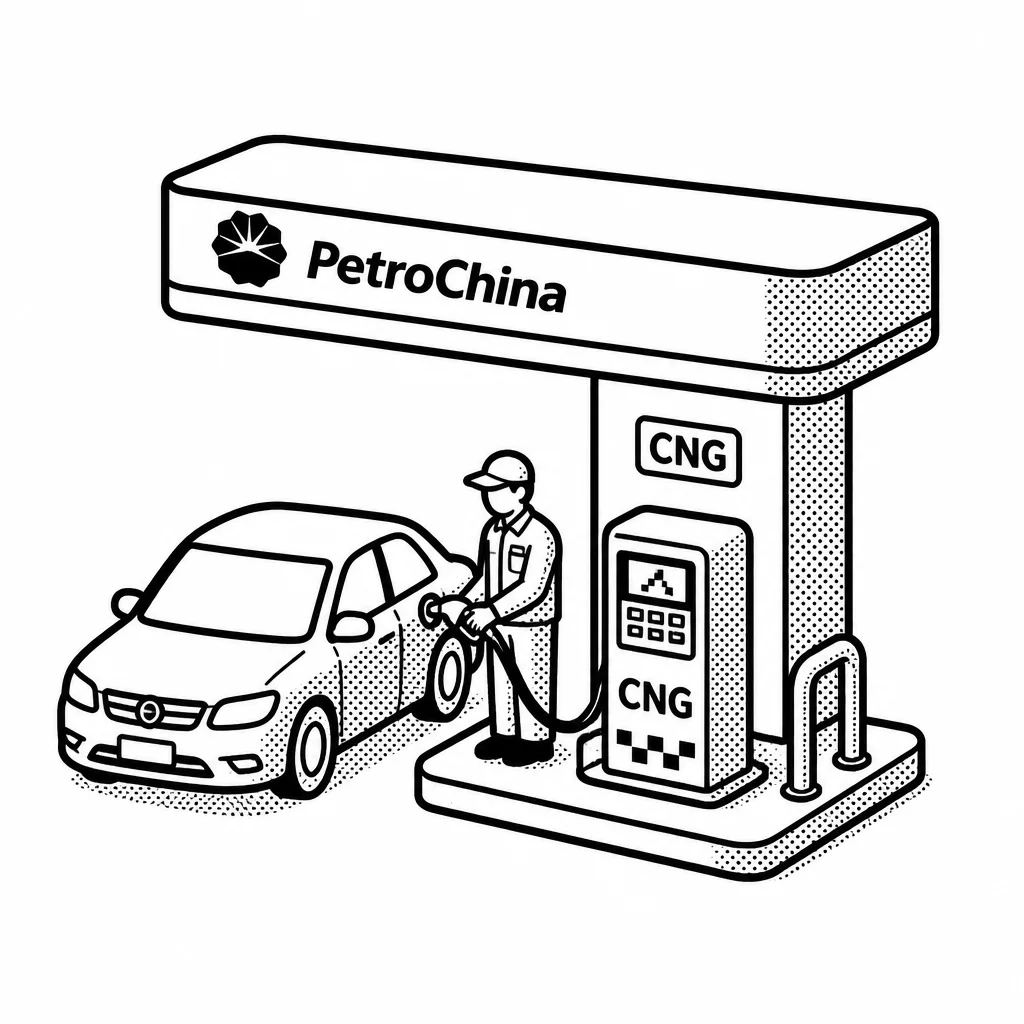
The business splits roughly into two halves. The upstream half finds oil and gas fields and pumps them dry — that is where the company actually produces the raw stuff. The downstream half takes that crude and cooks it into useful products at refineries, then sells the fuel through a huge network of gas stations and to industrial customers. The chemicals arm turns some of the refined output into the building blocks for plastics and other materials. Oil prices and refining margins move these two halves in opposite directions: when crude is expensive, the pumpers make money but the refiners get squeezed. PetroChina matters because it is a core supplier of China's energy. The country imports far more oil than it pumps itself, so a domestic heavyweight like this plays a national-security role as much as a commercial one. The company pays big dividends and mostly behaves like a cash-generating utility with an oil price attached. But it is also vulnerable to falling oil prices, government price controls on fuel, and the long-term shift toward cleaner energy that could erode demand for its core products.
One quirk worth knowing: PetroChina has spent years buying back its own shares and paying generous dividends, and its share count is watched closely by investors because the government's stake keeps it tightly controlled. The company does not chase the kind of flashy growth that tech firms do. It drills, it refines, it sells, and it keeps the lights on in China — a very large, very steady, and very political business.
Saved answer · last researched 12 Nov 2026