Understand any stock in simple English
Enter a ticker to learn what the company does and how it makes money.
Link Real Estate Investment Trust
Link REIT owns and manages shopping malls, offices, car parks and fresh markets, mostly in Hong Kong, and collects rent from the tenants who use them.
Link REIT is a landlord, and the simplest way to picture it is as the owner of the shopping centres and car parks that sit underneath or beside the apartment blocks where lots of Hong Kong people live. Its tenants are the shops you'd find in a neighbourhood mall — supermarkets, restaurants, pharmacies, banks, tutoring centres — plus the stallholders in its fresh markets. It also owns offices and car parks, and it collects rent from all of them.
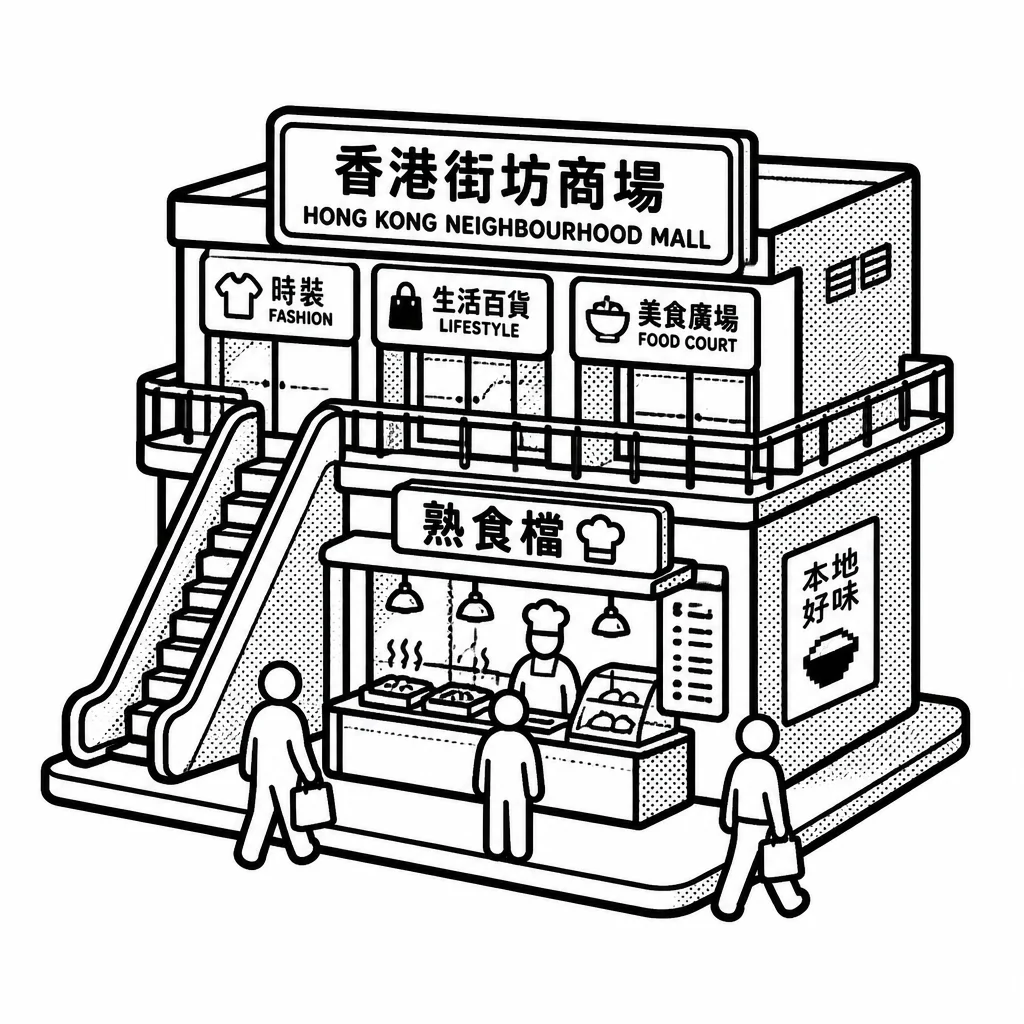
The business works because these malls are embedded in dense residential areas where people shop close to home. A supermarket or a noodle shop needs that foot traffic, and Link's centres supply it, so tenants are willing to pay rent for the space. Link earns money on that rent, and it can raise rents when a centre is busy and well managed. Because these are everyday necessities rather than luxury goods, the cash flow tends to hold up reasonably well even when the economy is soft. The company started life as the retail and car park assets sold off by the Hong Kong Housing Authority, and it listed on the Hong Kong Stock Exchange in 2005 as the first real estate investment trust in the city. That structure matters: a REIT must pay out most of its income to unitholders as distributions, so Link is effectively a machine for turning rent into regular cash payouts. It has also grown beyond Hong Kong into mainland Chinese cities like Beijing and Shanghai, plus markets such as Australia and the UK, though Hong Kong remains the heart of the portfolio.
The knock on Link over the years has been that it squeezes tenants hard — raising rents and replacing small local shops with chains — which has made it a lightning rod in Hong Kong's cost-of-living debates. That reputation is part of the story: it tells you the business is run for rental growth, which is good for unitholders and less popular with the people paying. Its main vulnerabilities are the health of Hong Kong retail, competition from other malls, and the fact that its fortunes are tied to one city's economy.
Saved answer · last researched 17 Nov 2026