Understand any stock in simple English
InBody Co., Ltd.
InBody makes body composition analyzers and medical devices that show people and their doctors what their body is made of.
InBody makes the machines that tell you what your body is made of. Step on one of its body composition analyzers — bare feet on metal plates, hands gripping handles — and within a minute you get a readout of your muscle, fat, and water, broken down by body part. Hospitals, gyms, clinics, and dietitians around the world buy these machines because they need a quick, reliable snapshot of a person's health, and the test is non-invasive and easy to repeat.
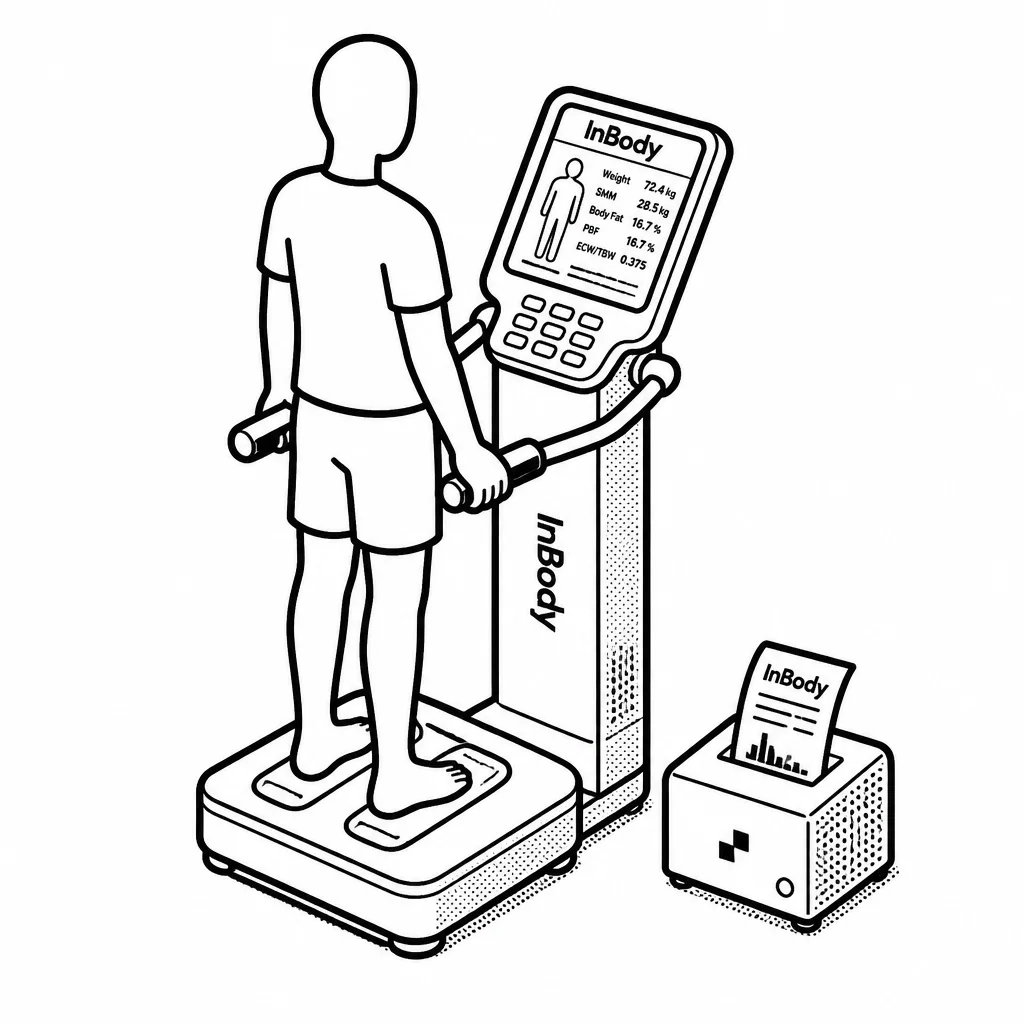
The company is headquartered in South Korea and was formerly called Biospace Co., Ltd. It sells under the InBody brand to healthcare providers and fitness businesses worldwide, with a meaningful chunk of revenue coming from outside its home market. The core appeal is simple: the machines are accurate, fast, and reasonably priced compared with heavier medical imaging equipment, so a small clinic can afford one. Beyond the body composition analyzers, InBody also makes other medical devices and diagnostic tools for healthcare providers, though the body analyzer line is the clear anchor of the business. Competitors include other medical device and body composition equipment makers, but InBody's brand is well known in its niche, and its installed base in gyms and clinics gives it a recurring pull as those customers upgrade or expand.
One honest caveat: this is a niche hardware business. Demand rises and falls with spending by gyms, clinics, and healthcare systems, and a competitor with a cheaper or more capable machine could win customers. But for a company that essentially sells a scale that understands your body, the global push toward preventive health and fitness tracking is a helpful tailwind.
Saved answer · last researched 20 Nov 2026
BIG PICTURE
InBody machines sit in only about 2% of America's 224,000 medical facilities
- 2% US medical facilities with InBody devices
- 98% US medical facilities without InBody devices
America is InBody's biggest market, yet its machines are in roughly one in fifty of the country's medical facilities. As GLP-1 weight-loss drugs spread, clinics need a way to track muscle and fat during treatment, and each new clinic that installs an analyzer becomes a customer. The near-empty map shows how much selling room is left. Source: Korea Investment & Securities via EDAILY, data from 2026
Timeline
A Doctor's Doubt Becomes a Company
At the University of Utah and Harvard Medical School, Dr. Kichul Cha kept running into body-composition research that was flawed, and he came away convinced of something simple: what really matters for health is the balance of muscle and fat, not just the number on a scale. He came back to Korea, spent about a year building the idea into a working device, and in 1996 founded Biospace with four employees. The company then launched the InBody 2.0, the first body composition analyzer to measure the body segment by segment and at multiple frequencies at once.
Biospace Lists on KOSDAQ
Through the late 1990s the machines spread into hospitals, clinics and fitness centers, and that growing sales base carried the company onto the KOSDAQ market in December 2000.
One Name for Every Product
Until then the company's analyzers had sold under various brand names. In 2005 it put every one of them under the single InBody series, so clinicians and ordinary consumers around the world could recognize the same name.
A Body Analyzer for the Home
The next year it launched a home-use body composition analyzer, a first step beyond clinics into the consumer market. The pitch was clever: tracking your body composition over time is a health habit, not a replacement for the bathroom scale.
GE Healthcare Partnership
In 2009 came a partnership with GE Healthcare, one of the biggest names in medical devices. It was a validation play: if the technology held up against a platform that large, the company's bioelectrical impedance method could be trusted at that level too.
Biospace Becomes InBody
By 2014 the brand had outgrown the corporate name, so Biospace Co., Ltd. renamed itself InBody Co., Ltd. to match the product the world already knew.
A Wearable That Reads Body Composition
In 2015 the company launched the InBody BAND, the world's first wearable body composition device, and it won a CES 2015 Innovation Award for it.
Revenue Passes 100 Billion Won
Annual revenue crossed KRW 100 billion in 2019, just five years after first passing KRW 50 billion in 2014. In other words, the company doubled in size in half a decade.
A Second Plant in Cheonan
In 2021 the company built a second plant in Cheonan as part of expanding how much it could produce.
A Subsidiary in Vietnam
In 2024 it set up a local subsidiary in Vietnam as part of its continuing push to expand around the world.
GLP-1 Drugs Bring New Demand
Then came an unexpected tailwind: GLP-1 obesity drugs put body composition in the spotlight, and U.S. hospital sales jumped more than 60% in the first half of 2026. The company had recently taken a hit building out its own overseas sales network, which dragged operating margin down from 26% to 16%, but by the second quarter of 2026 it had recovered to 20%. Analysts now see the company entering a re-rating phase as demand diversifies and those upfront costs finally pay off.