Understand any stock in simple English
Enter a ticker to learn what the company does and how it makes money.
China Petroleum & Chemical Corporation
Sinopec refines crude oil into the fuels and chemicals that keep China's cars, trucks and factories running.
Sinopec is one of China's largest state-owned oil companies, and it sits right in the middle of the country's energy supply chain. It refines crude oil into gasoline and diesel, sells that fuel through a vast network of service stations, and produces the petrochemicals and chemicals that factories need to make plastics, fibres and thousands of everyday products. Its customers are both ordinary drivers and big industrial buyers, in China and increasingly abroad.
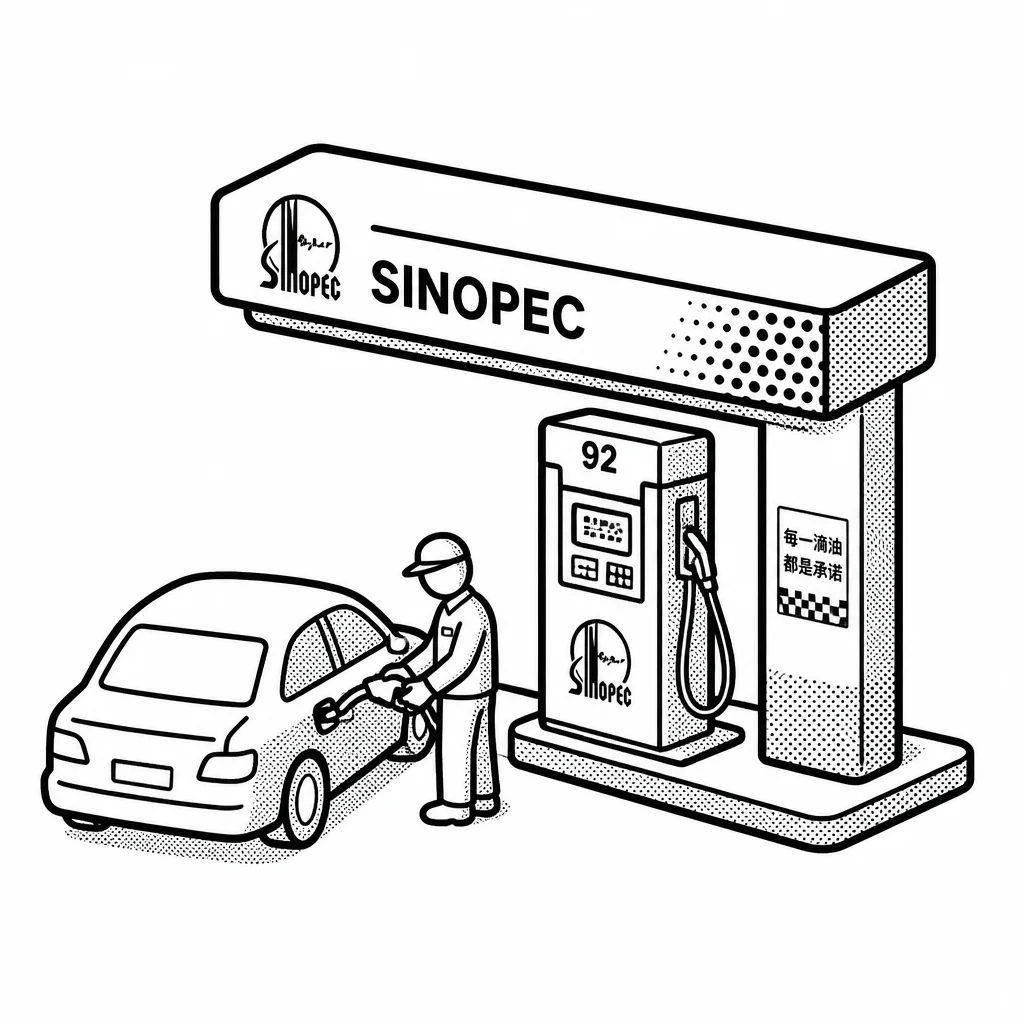
The business splits into two broad halves. The upstream side finds and pumps oil and gas, while the much larger downstream side turns that crude into sellable fuel and chemicals and delivers it to customers. That downstream engine — refining, retail fuel and chemicals — is where most of Sinopec's revenue comes from. Its thousands of gas stations sell directly to drivers, and its chemical plants sell to manufacturers who use the output as raw material. The way the money works is simple: Sinopec buys crude oil, processes it, and sells the refined products for more than the combined cost of the oil and the processing. That spread is the profit. It is a low-margin, high-volume business, and it moves with oil prices and China's appetite for fuel. When crude gets expensive but fuel prices lag, the spread squeezes and profits fall; when demand is strong, the volumes swell. That dependency cuts both ways. Sinopec benefits from China's enormous fuel consumption and its position as one of the country's two big state oil giants, alongside PetroChina. But it faces competition from that peer, from independent refiners, and from a long-term shift toward electric vehicles that could slowly erode fuel demand. The company also has a growing clean-energy and hydrogen push, though its core remains refining and chemicals.
Oil companies like this generate a lot of cash, and Sinopec uses its free cash flow to pay generous dividends and maintain its giant asset base, while also investing in new chemical capacity and green energy projects. It is a company whose fortunes are tied to the cost of a barrel of oil and the strength of Chinese industry — profitable in the good spreads, exposed when they narrow.
Saved answer · last researched 12 Nov 2026