Understand any stock in simple English
Enter a ticker to learn what the company does and how it makes money.
Tingyi (Cayman Islands) Holding Corp.
Tingyi makes and sells instant noodles and bottled drinks, and bottles PepsiCo drinks in China.
Tingyi is the company behind Master Kong, the red-and-white brand of instant noodles and bottled drinks that shows up in countless Chinese kitchens, convenience stores, and dorm rooms. It sells instant noodles, beverages, and instant food products directly to consumers, and it also runs the bottling operation for PepsiCo drinks in China. If you have ever grabbed a cup of noodles or a bottle of iced tea from a shelf in China, there is a decent chance it came from this company.
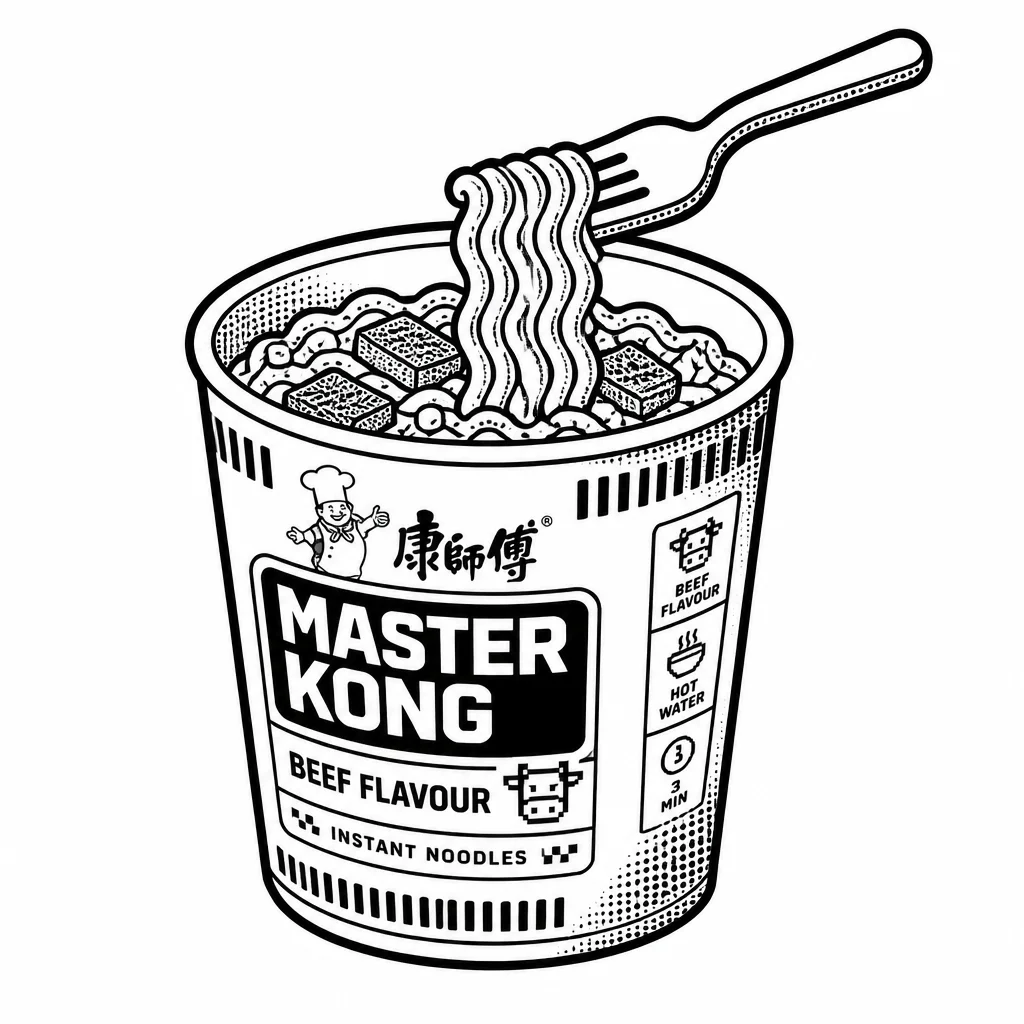
The business is really two big engines. One is instant noodles: cheap, filling, and sold by the billions of packets and cups. The other is beverages — bottled water, tea, juice, and carbonated drinks — where the PepsiCo bottling deal lets Tingyi make and distribute Pepsi-branded drinks without owning the brand itself. Customers are ordinary shoppers paying a few yuan at a time, while the company makes its money on enormous volume and tight control of factories and distribution. That distribution network is the quiet superpower. Tingyi pushes products into millions of small shops, supermarkets, and vending outlets across China, and getting a bottle of tea onto a rural shelf is harder than it sounds. Scale keeps costs low, and low costs let it compete on price in a market where rivals like Uni-President fight for the same shelf space. Instant noodles are a mature, slow-growth business, so beverages carry much of the growth story, and competition there is fierce. Tingyi has had a bumpy ride. A food-safety scare in Taiwan several years ago hurt trust and sales, and the company has worked to rebuild its reputation since. More recently, Chinese consumers have been spending more cautiously, which pressures a business built on everyday small purchases. The company still generates real cash, and it has leaned on dividends and buybacks to return money to shareholders rather than hoarding it.
The Hong Kong listing reflects a company that started in Taiwan and grew into one of China's biggest food and drink groups, with the Cayman Islands holding structure common among Chinese firms listed there. It is a simple business at heart: make cheap, tasty, convenient things, move them through a giant network, and sell enough of them to turn a small margin into a very large number.
Saved answer · last researched 14 Nov 2026