Understand any stock in simple English
Enter a ticker to learn what the company does and how it makes money.
Samsung SDS Co., Ltd.
Samsung SDS is an IT services company that helps businesses run their technology, from consulting and building software to running their computer systems in the cloud.
Samsung SDS is the IT services arm of the Samsung empire, and it mostly does the unglamorous plumbing that keeps big organizations running. When a large company needs someone to build its internal software, run its data centers, or move its operations to the cloud, Samsung SDS is one of the names it calls. It sells to businesses rather than to you or me, and its biggest customer by far is the wider Samsung family of companies.
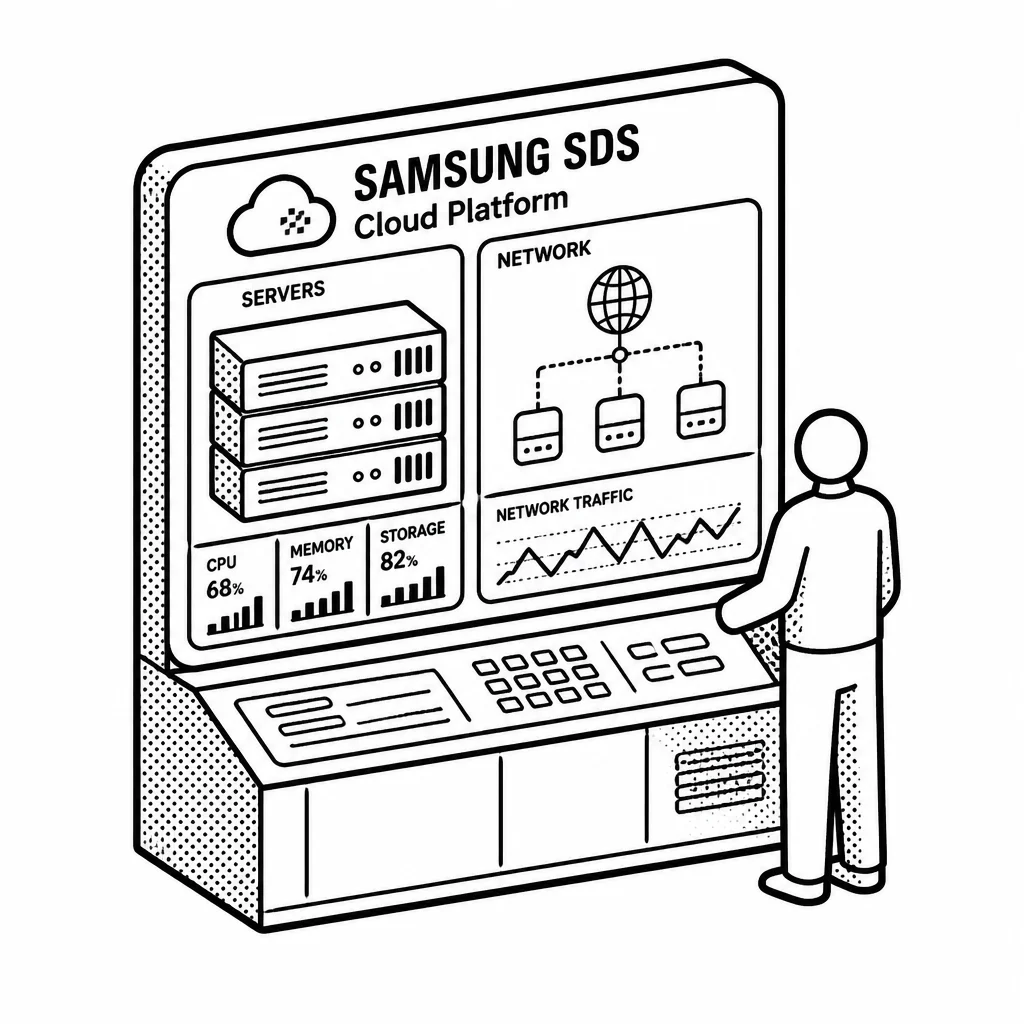
The business has a few main parts. One is outsourcing and IT infrastructure: ADP, its data center outsourcing service, essentially takes over a client's computer systems and runs them on the client's behalf. Another is cloud computing, where Samsung SDS helps companies move to cloud platforms and sell its own cloud products, including its Brity Works collaboration tool and its Brightics data-analytics software. It also builds and integrates enterprise software — the sprawling systems that companies like SAP sell to run finance, HR, and manufacturing. Its position is unusual and a little awkward. The bulk of its revenue comes from captive work for Samsung subsidiaries, so it has a giant, reliable base of customers that other IT outsourcers would kill for. But that dependence is also the knock against it: outside clients can view Samsung SDS as a Samsung-first shop, and the company has been pushing for years to win more business from non-Samsung customers to reduce that reliance. It competes against global IT services giants like Accenture and IBM, as well as Korean rivals, and against the cloud providers themselves — Amazon, Microsoft, and Google — whose platforms it resells and builds on.
Samsung SDS has been investing hard in newer areas like cloud, generative AI services, and logistics platforms, betting that these will carry growth as traditional outsourcing slows. It is profitable, cash-generative, and pays dividends, and its status inside the Samsung group gives it a stable, if somewhat sheltered, franchise. The core question for investors is simple: can it become a genuine outside-facing IT services company, or will it always mostly be paid to keep Samsung's own machines humming?
Saved answer · last researched 12 Nov 2026