Understand any stock in simple English
Enter a ticker to learn what the company does and how it makes money.
LG Innotek Co., Ltd.
LG Innotek makes advanced electronic components — most famously the camera modules in smartphones — and sells them to device makers, car companies, and chip and display manufacturers.
LG Innotek is the company that builds the tiny, complicated eyes inside your smartphone. It makes camera modules — the lens, image sensor, and image-stabilization machinery squeezed into a package smaller than a fingernail — and it is the biggest supplier of these modules for Apple's iPhones. That single relationship is the heart of the business: when a new iPhone ships with a better zoom or a sharper sensor, LG Innotek is usually the company that figured out how to manufacture it at massive scale. But camera modules are only one part of the story. LG Innotek also makes semiconductor substrates (the stiff boards that hold and connect chips), display-related parts, and electronic components for cars, including sensors and communication modules for connected and self-driving vehicles.
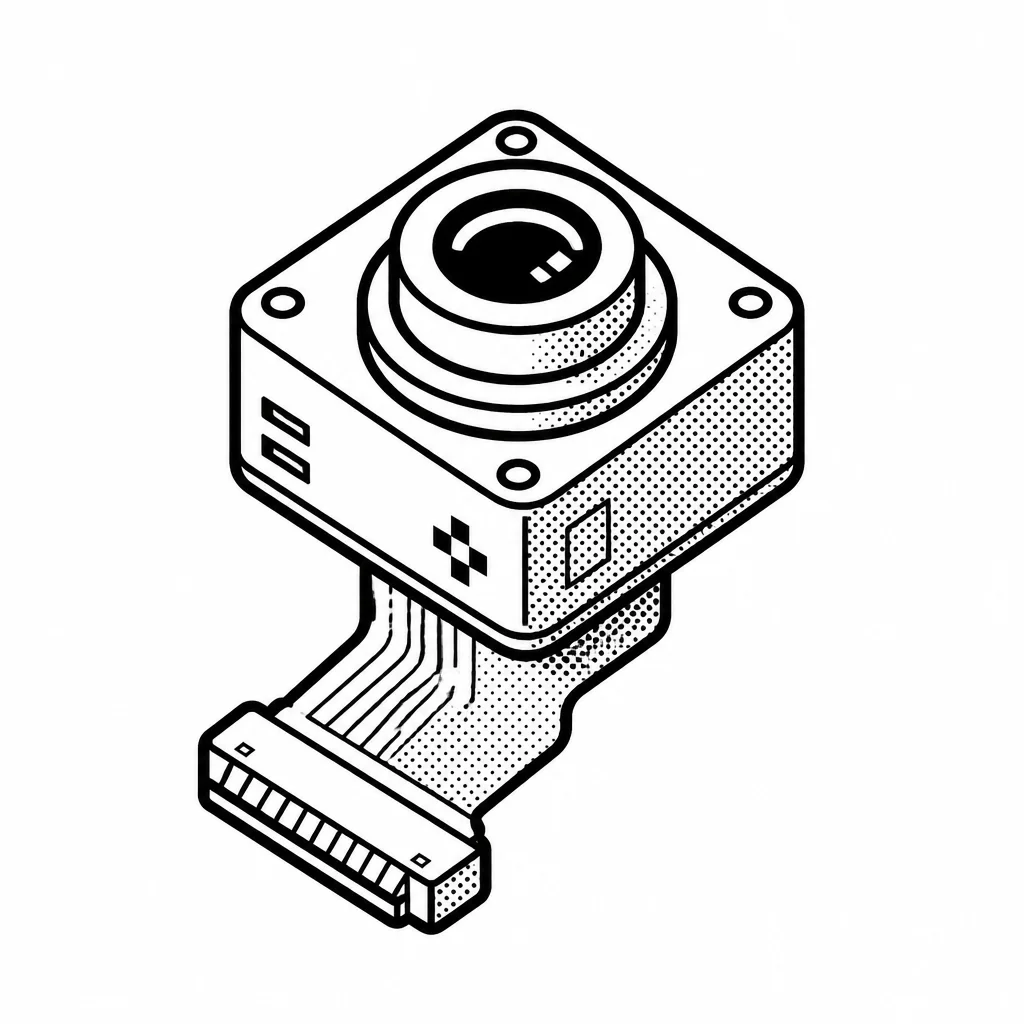
The customer logic is simple. Building a phone camera that is thinner than a pencil yet good enough for professional-looking photos requires precision manufacturing that few companies can pull off at iPhone volumes. LG Innotek wins that work because it can deliver enormous quantities at tight quality tolerances, and because it invests heavily in the hard manufacturing problems — folded zoom lenses, advanced image stabilization, and more recently, camera modules for augmented-reality and automotive use. Its customers are the world's biggest consumer-electronics and automotive brands, and its revenue rises and falls with their product cycles. When Apple has a strong iPhone year, LG Innotek has a strong year; when phone demand softens, the company feels it quickly. That dependence cuts both ways. Apple is a demanding customer that pushes suppliers to lower prices and spread orders across multiple vendors, and LG Innotek's results are closely tied to the fortunes of a single product line. The company has been working to broaden its base. Semiconductor substrates are a growing business — these are the packaging boards that connect memory and logic chips, and demand has surged with the artificial-intelligence boom. Automotive components are another bet: cameras, radar, and connectivity modules for cars, a market that should grow as vehicles become smarter. A major strategic push is "substrate for AI" — high-end packaging that helps powerful chips talk to memory quickly. The company sits inside the enormous LG family — historically it was LG Electro-Components, a parts-making sibling of LG Electronics — but it is separately listed on the Korea Exchange and has its own investors to answer to. It competes in camera modules against Sunny Optical and several Taiwanese and Chinese suppliers, and in semiconductor substrates against Ibiden, Shinko Electric, and others. LG Innotek also has a small but notable materials business, making things like semiconductor packaging materials and rare-earth magnets. The business is capital-hungry: building a new substrate plant or camera-module line costs serious money, and the company spends heavily on research and factories to stay ahead.
There is a nice irony in the business. Most people have never heard of LG Innotek, yet nearly everyone carries its work in their pocket. It is a classic hidden champion: a parts supplier whose name appears on no product box, but whose engineering shows up in the photos you take every day. The risk is that hidden champions earn their keep by being slightly better and slightly cheaper than the next supplier, and their customers hold the leverage. That is why the camera-module dominance matters, and also why the company keeps pushing into chips and cars — it wants to be indispensable in more than one place at once.
Saved answer · last researched 12 Nov 2026