Understand any stock in simple English
Enter a ticker to learn what the company does and how it makes money.
Korea Zinc Company, Ltd.
Korea Zinc runs a giant smelter that turns raw metal ores into the zinc, lead, copper, gold, silver, and other metals that factories and electronics makers around the world depend on.
Korea Zinc runs one of the world's biggest non-ferrous metal smelters. It buys raw ore and scrap from mines and recyclers, then melts and refines them into finished metals — primarily zinc, but also lead, copper, gold, silver, and a long list of rarer metals. Customers are steelmakers, carmakers, battery makers, electronics firms, and traders who need these metals by the ton.
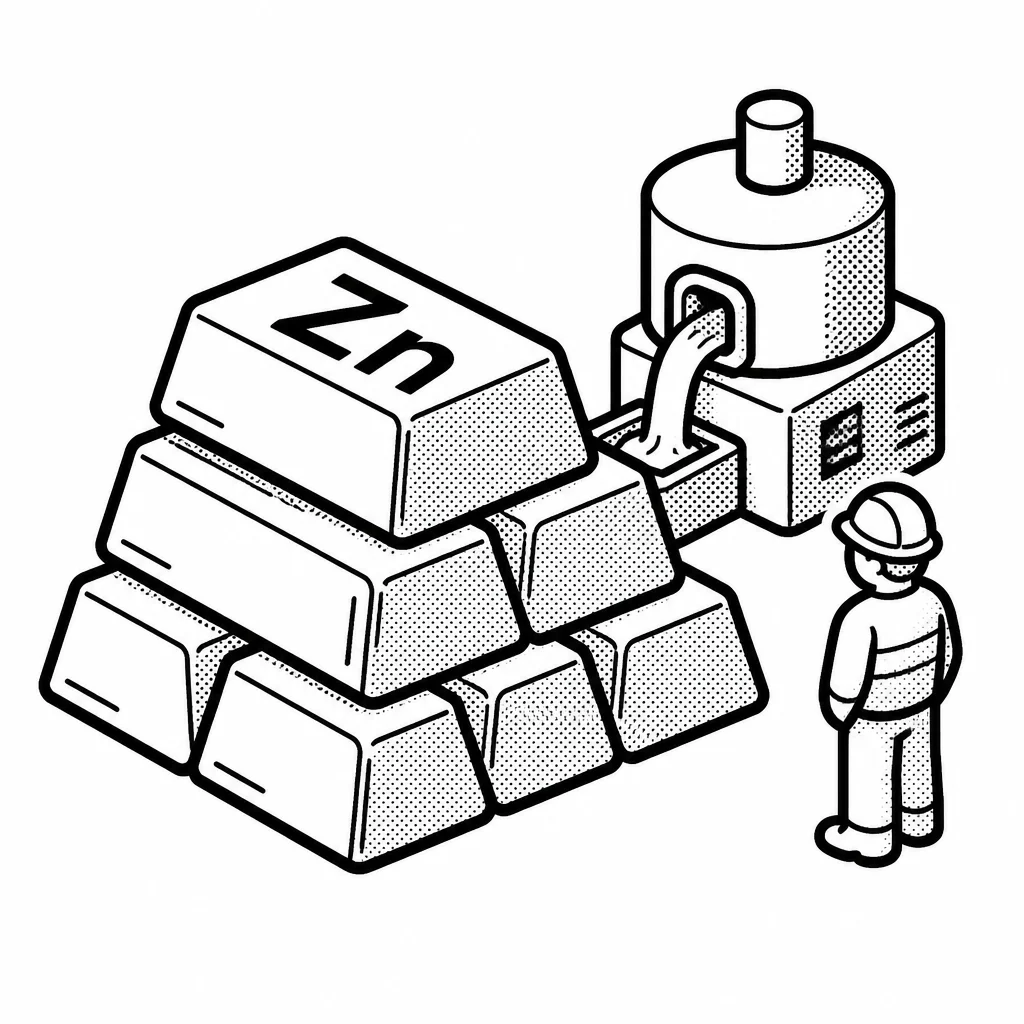
The business sits in a strange, powerful spot. Korea Zinc doesn't dig anything out of the ground itself, so it doesn't gamble on finding ore. Instead it makes money from the gap between what it pays for raw material and what it sells the refined metal for — a processing fee, essentially, plus a share of the value in the metals it recovers. Its smelter in Onsan, near the southern city of Ulsan, is one of the largest in the world, and the company's scale and technical skill let it handle messy, low-grade material that smaller smelters can't. The most interesting trick is what Korea Zinc can pull out of the leftovers. Beyond zinc and lead, it recovers tiny amounts of indium, tellurium, and other rare metals that end up in screens and solar panels. That gives it multiple bites at the apple from a single load of ore. In recent years it has been pushing hard into battery materials and recycling, trying to turn old scrap and waste into the metals that go into electric-car batteries — a bet that the electric transition will keep demand for its skills growing.
The company's power comes from scale, refining know-how, and a global trading network. The risk is that metal prices swing hard, and the whole smelting business depends on the health of steel and construction — its biggest customers. Competition comes from big smelters like Boliden in Europe and Teck Resources in North America, and from Chinese smelters that keep adding capacity. Korea Zinc also sits in a deeply political corner of the economy: as a key supplier of metals used in industries the government cares about, it has drawn attention from regulators and rivals alike.
Saved answer · last researched 12 Nov 2026