Understand any stock in simple English
Enter a ticker to learn what the company does and how it makes money.
HD Korea Shipbuilding & Offshore Engineering Co., Ltd.
HD Korea Shipbuilding & Offshore Engineering builds ships, offshore platforms, marine engines, and green energy systems for customers around the world.
HD Korea Shipbuilding & Offshore Engineering is one of the world's largest shipbuilders. It builds the giant vessels that carry the world's cargo — container ships, oil tankers, gas carriers — plus offshore platforms for oil and gas, and the engines that power ships. Its customers are shipping lines, energy companies, and navies, mostly in Asia, Europe, and the Middle East.
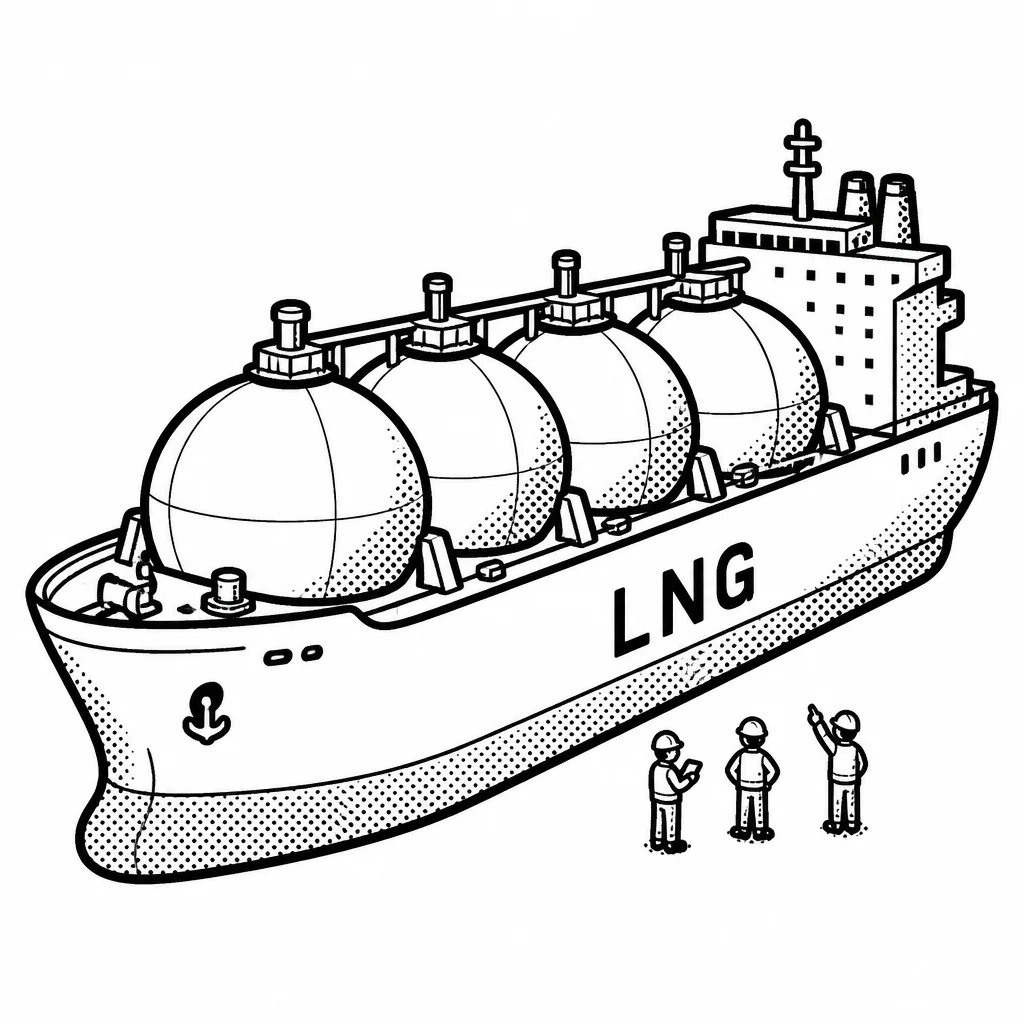
The business runs on a simple idea: a ship is a huge, expensive machine built to order. A customer orders a vessel years in advance, pays in stages, and the shipyard uses that money to buy steel and parts while it builds. Profit comes from building efficiently and from getting paid more than the steel and labor cost. That is harder than it sounds. Shipbuilding is brutally cyclical — years of fat profits followed by years of empty order books and losses. Korean yards like this one compete hard with Chinese yards, which have grabbed a growing share of the market on price. The company is part of HD Hyundai, a sprawling Korean industrial group. It sits at the center of the group's shipbuilding empire, which also includes HD Hyundai Mipo and HD Hyundai Samho, and it owns a big stake in the engine maker HD Hyundai Heavy Industries' engine unit. Its most interesting push today is green: ships that run on cleaner fuels like methanol and ammonia, plus systems to capture carbon on board, as the shipping industry faces rules to cut emissions. That matters because shipowners must replace aging fleets, and only yards that can build these new-fuel vessels will win the next wave of orders.
It is a deeply cyclical, capital-hungry business with thin margins and powerful rivals, but also a strategic one — the kind of company a country wants to keep, because the skills are hard to rebuild once lost. Recent years have been strong as global trade recovered and ship prices rose after a long slump. The key question for investors is whether the green-ship upgrade cycle gives Korean yards a profitable edge over cheaper Chinese competitors, or whether it turns into another price war.
Saved answer · last researched 12 Nov 2026