Understand any stock in simple English
Enter a ticker to learn what the company does and how it makes money.
ISU Petasys Co., Ltd.
ISU Petasys makes high-end printed circuit boards — the physical wiring inside electronics — for AI servers, network gear, satellites, and chip-testing machines.
ISU Petasys makes printed circuit boards, or PCBs. These are the flat boards covered in copper lines that carry power and signals between chips; almost every electronic device has at least one. Most PCBs are cheap commodity parts made by the millions. Petasys plays a different game: it builds the hard ones, the large, many-layered boards that go inside AI servers, networking switches, satellites, and machines that test computer chips before they ship.
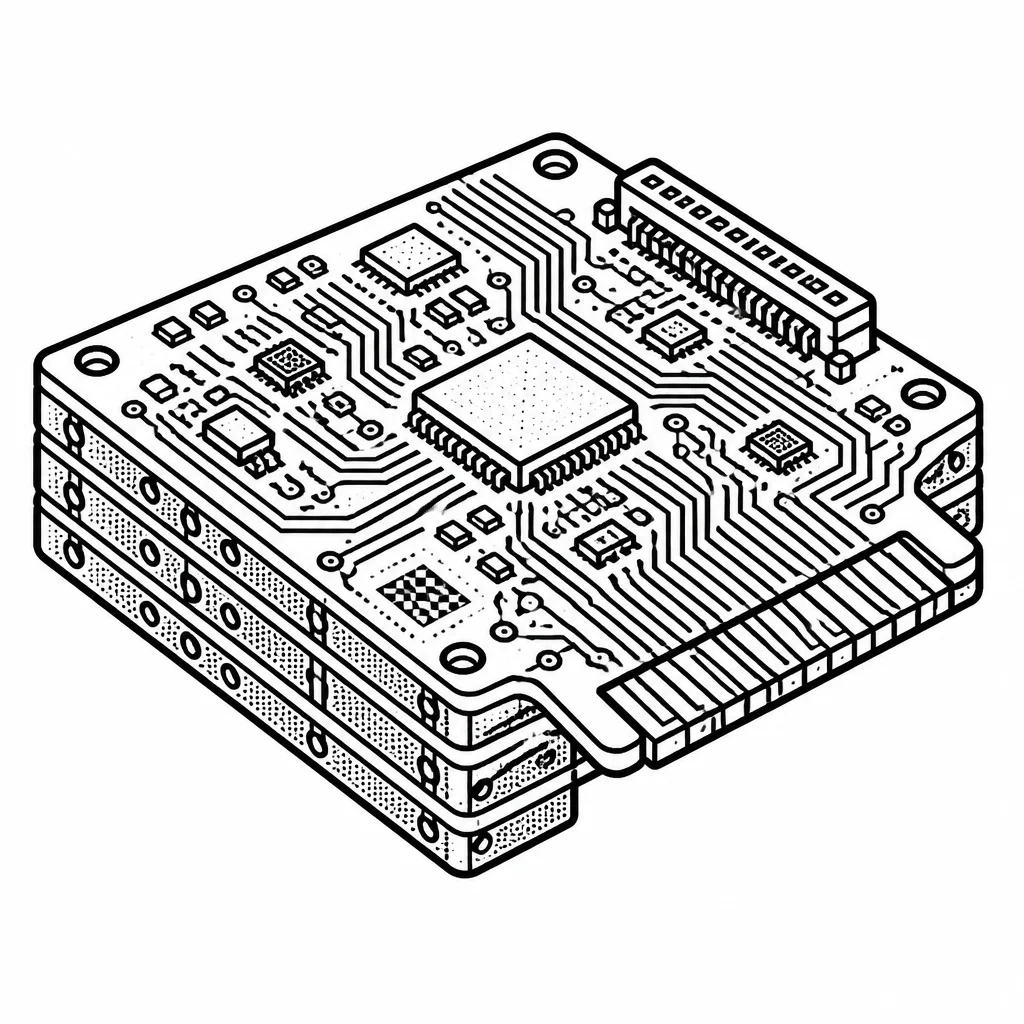
The business runs on a simple idea. As data centers fill up with AI computers, the boards inside them need far more layers and far finer wiring to move huge amounts of data between processors without losing the signal. Only a handful of manufacturers can make these boards reliably, so buyers pay up. In the chip-testing world, the company makes "probe cards" and test boards that act as the delicate bridge between a testing machine and the microscopic circuitry of a chip — a fiddly, precision product that is hard to copy. The company, based in Daegu, South Korea, used to be called Petasys and now sits under the ISU Group umbrella. Its rise has tracked the AI boom: demand for high-layer-count boards for AI servers and network equipment has driven rapid revenue growth, and the company has been spending to expand capacity to keep up. That expansion is the bet — and the risk. If AI spending cools, the extra factories become expensive idle metal.
Its rivals are mostly Asian board makers, and customers hold real power because they can qualify a second supplier. Still, the trend line favors Petasys: more AI computing means more of the costly, tricky boards it specializes in. The company is a pure bet on that plumbing, and for investors it has become one of the cleaner ways to own a piece of the AI hardware buildout.
Saved answer · last researched 12 Nov 2026