Understand any stock in simple English
Enter a ticker to learn what the company does and how it makes money.
LS Corp.
LS Corp is a South Korean industrial holding company whose main business makes power cables and electrical equipment for utilities and factories, and whose other businesses sell tractors, copper materials and liquefied natural gas.
LS Corp is an industrial holding company in South Korea that sits behind a set of businesses most people have never heard of but rely on every day. Its biggest job is making power cables and electrical gear — the heavy copper lines, switchgears and transformers that move electricity from power plants to factories, buildings and homes. If a country is building new grids, connecting offshore wind farms or upgrading old transmission lines, someone has to supply that hardware, and LS Cables is one of the world's major suppliers of it.
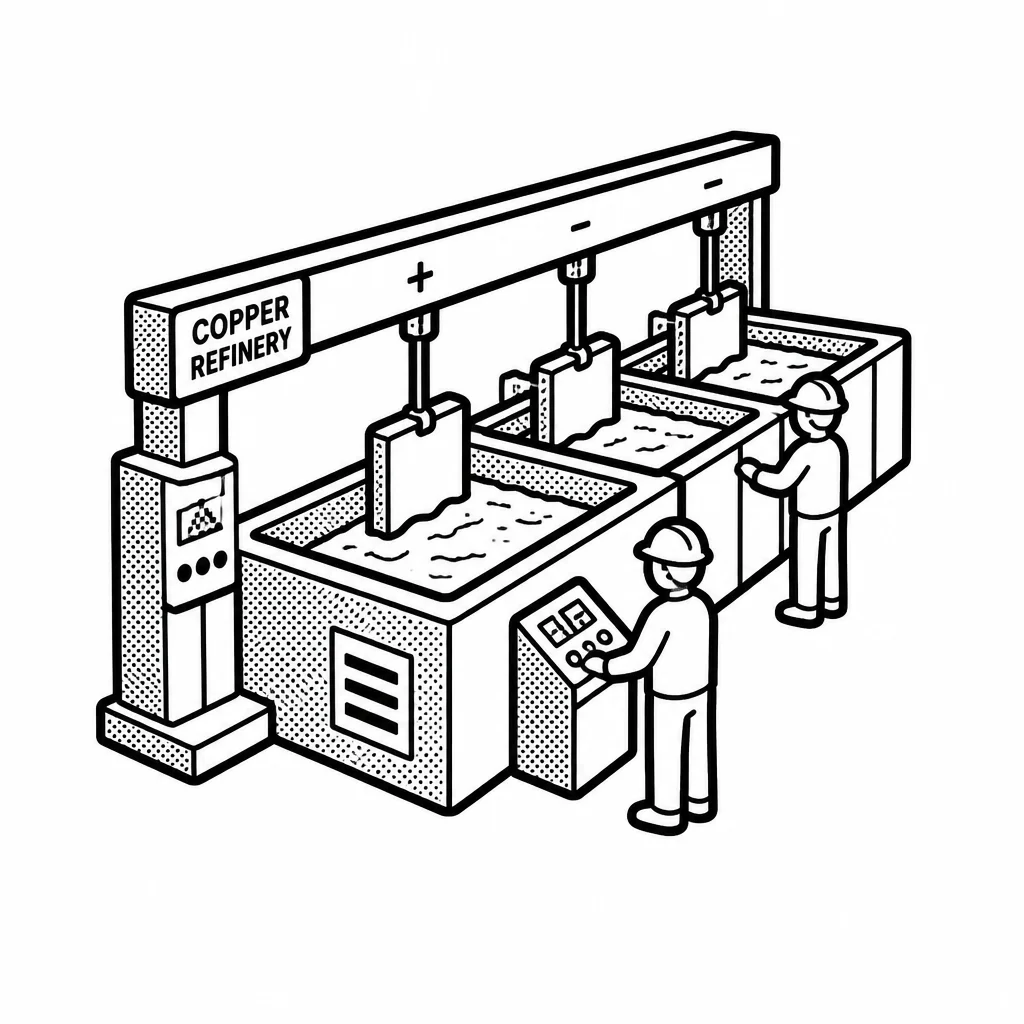
The parent also owns a set of side businesses that each serve a different customer. One subsidiary makes copper products, the raw metal that its own cable makers need. Another builds tractors and farm equipment, mainly for farmers overseas. And another takes liquefied natural gas — natural gas chilled until it becomes a liquid so it can travel in ships — and delivers it to industrial customers who need steady, guaranteed fuel. So the same company sells the pipes that carry electricity, the copper inside them, the machines that work the land, and the fuel to run plants. Why customers pick LS comes down to scale and trust. Power cables are not a flashy product, but a failed cable can black out a city, so utilities buy from suppliers with track records and certifications. LS has spent decades building factories across Asia, Europe and the Americas, which lets it serve big grid projects close to where they are being built and win contracts that a smaller player could not handle. It also rides long building cycles: when governments spend heavily on energy infrastructure, as many are doing to upgrade grids and add renewables, the cable business grows. The hard part is that this is a cyclical, capital-hungry business. Cable and copper prices swing with commodity markets, and profitability depends on winning big contracts at good prices rather than selling a high-margin product every day. Copper-thin margins mean volume and efficiency matter enormously, and a downturn in infrastructure spending or a surge in raw material costs can squeeze results. The LNG distribution and tractor businesses cushion that somewhat by serving different customers, but they do not entirely smooth out the ride.
The parent also plays the role a holding company always does: it holds stakes in its listed subsidiaries, collects dividends from them and decides where capital goes. That structure means investors can buy a slice of several industrial businesses at once rather than betting on a single unit. It is not a household brand, and that is the point — LS makes the unglamorous physical backbone that keeps electricity and industry moving, and gets paid when the big building cycles are on its side.
Saved answer · last researched 12 Nov 2026