Understand any stock in simple English
Enter a ticker to learn what the company does and how it makes money.
Hyundai Motor Company
Hyundai builds and sells cars, trucks, and buses around the world.
Hyundai is one of the world's biggest carmakers. It builds sedans, SUVs, pickup trucks, and commercial vehicles like buses and heavy trucks, and it sells them in most countries on Earth. If you have ridden in a taxi in Seoul, rented a car in Europe, or seen an Elantra on an American highway, you have probably encountered one of its products.
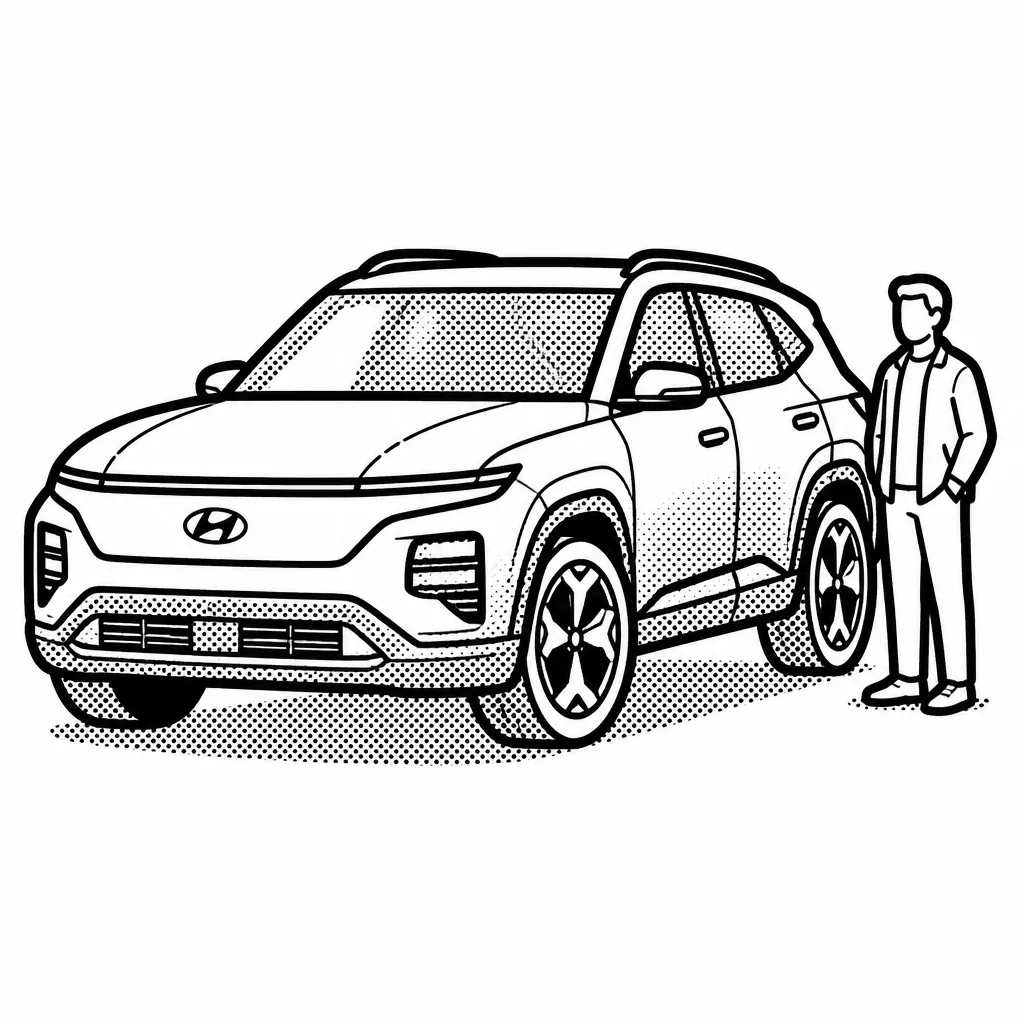
The company makes its money the straightforward way: it designs and assembles vehicles, then sells them through dealers and distributors to everyday drivers, families, and businesses. It also sells genuine parts and accessories and provides financing and after-sales service, which keep money coming in long after the initial sale. Buyers choose Hyundai largely on value — a lot of features and a long warranty for the price — and increasingly on design and quality, which have climbed a long way from the brand's budget-car reputation of the 1990s. Its home base is Seoul, and South Korea remains a crucial market, but the real growth engine is overseas. Hyundai operates factories in the United States, China, India, the Czech Republic, and elsewhere, which helps it dodge import tariffs and currency swings. Like every mass-market automaker, it lives under constant pressure from rivals such as Toyota, Volkswagen, and General Motors, and it is pouring billions into electric vehicles, hybrids, and software-defined cars as the industry pivots away from gasoline.
Hyundai is also part of a sprawling family empire. It sits within the Hyundai Motor Group, which also controls Kia — a sister brand that shares platforms and parts but competes for many of the same customers. That structure confuses outsiders, but it gives the group enormous scale in purchasing and engineering. The company returns cash to shareholders through dividends and share buybacks, and it has been one of the auto industry's steadier profit machines in recent years, helped by a weak Korean won and strong demand for high-margin SUVs and hybrids. Its biggest vulnerabilities are the ones every carmaker faces: price wars, rising EV costs, and the risk that trade barriers fragment the global market it depends on.
Saved answer · last researched 12 Nov 2026