Understand any stock in simple English
Enter a ticker to learn what the company does and how it makes money.
Taihan Cable & Solution Co., Ltd.
Taihan Cable & Solution makes the power and communication cables that carry electricity and data across countries, cities, and factories.
Taihan Cable & Solution makes the thick cables that carry electricity from power plants to cities and homes, and the cables that carry phone and internet signals. If you have ever looked up at a power line or walked past a construction site where new cables are being laid underground, you have seen the kind of thing this company produces. Utilities, builders, telecom carriers, and big industrial plants buy its products, and it has been doing this for a very long time — the business traces back to 1955 in South Korea.
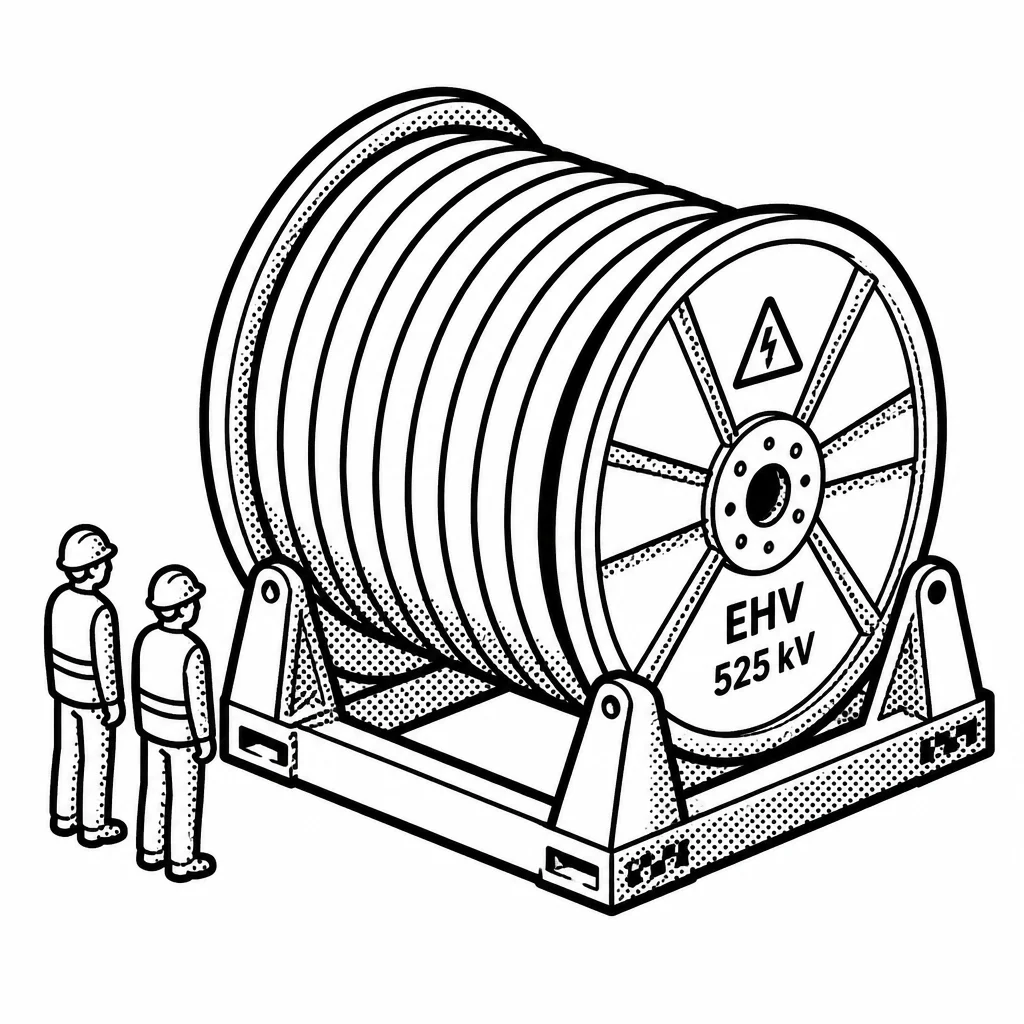
The company's biggest bet these days is on high-voltage cables, the heavy-duty lines used to move large amounts of power over long distances. That matters because the world is building far more transmission lines to connect wind and solar farms to the grid, and to upgrade aging electricity networks. Taihan makes these cables, along with the accessories and systems that join them together, and it sells to customers in many countries. It also makes communication cables, the fiber and copper lines that carry internet and phone traffic, and a range of smaller wire products for industry. Its main rivals are other large cable makers, especially in Europe and Asia, and winning big utility contracts is a grind: customers test samples, audit factories, and demand a track record of reliability before they trust a supplier with a multi-year project. Taihan has been spending heavily to expand its high-voltage cable capacity, including new plants, because it sees years of demand ahead from grid upgrades. The risk is that this is a cyclical business: cable prices rise and fall with the building cycle, and overcapacity can crush margins when everyone expands at once.
A useful bit of history: the company went through serious financial trouble and a restructuring around the 2010s, and it later renamed itself Taihan Cable & Solution as it pushed into higher-value products. The good news is that today the company is profitable and growing, helped by the global push to rebuild power grids. The trickier part is that it competes against bigger, well-established cable giants, so its future depends on winning enough large high-voltage projects to justify all the money it is pouring into new factories.
Saved answer · last researched 15 Nov 2026